
Warehouse d'Eersteling | Gildekwartier
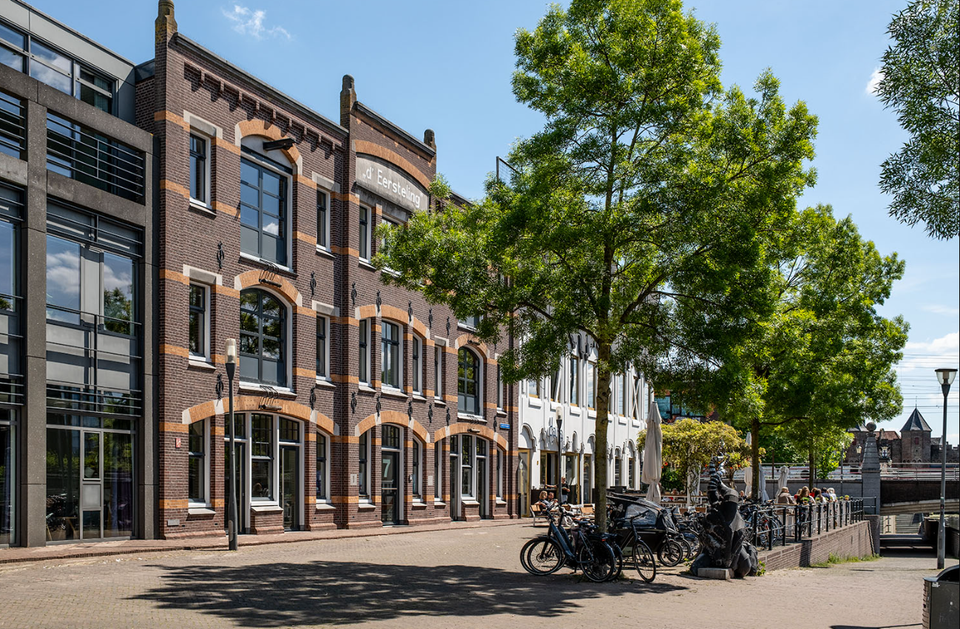
Pakhuis d’Eersteling was designed in 1904 by Herman Kroes and is a distinctive example of industrial heritage at the Amersfoort harbor. The original architectural plans show that the building was constructed for the “Colonial Goods Department.” This term was used to refer to products and crops from the colonies of that time.
The building currently consists of three structures. The office spaces were located in the center, with warehouses on either side featuring large French doors for the transport of goods. The construction, layout, and location along the Eem River are characteristic of a warehouse. Merchandise was transported to and from the city via the river.
Warehouses in Amersfoort were usually located in the city center so that the municipal government could keep an eye on them. It’s likely there was no more room there, which is why d’Eersteling was built at the harbor. The building was initially used by a grocery company and later for the poultry and grain trade.
The...
Pakhuis d’Eersteling was designed in 1904 by Herman Kroes and is a distinctive example of industrial heritage at the Amersfoort harbor. The original architectural plans show that the building was constructed for the “Colonial Goods Department.” This term was used to refer to products and crops from the colonies of that time.
The building currently consists of three structures. The office spaces were located in the center, with warehouses on either side featuring large French doors for the transport of goods. The construction, layout, and location along the Eem River are characteristic of a warehouse. Merchandise was transported to and from the city via the river.
Warehouses in Amersfoort were usually located in the city center so that the municipal government could keep an eye on them. It’s likely there was no more room there, which is why d’Eersteling was built at the harbor. The building was initially used by a grocery company and later for the poultry and grain trade.
The first “Eersteling” was located at Kortegracht 9 and looked quite different. This building served as both a warehouse and a poultry and livestock feed factory.
Today, d’Eersteling is a national historic landmark that houses office spaces. The surrounding area still evokes memories of the former Van Heugten factory, other port activities, and the city’s historic connection to Jerusalem and the railroad. The nearby quay wall and stairs leading down to the Eem River are being restored.