
Grote Spui 29
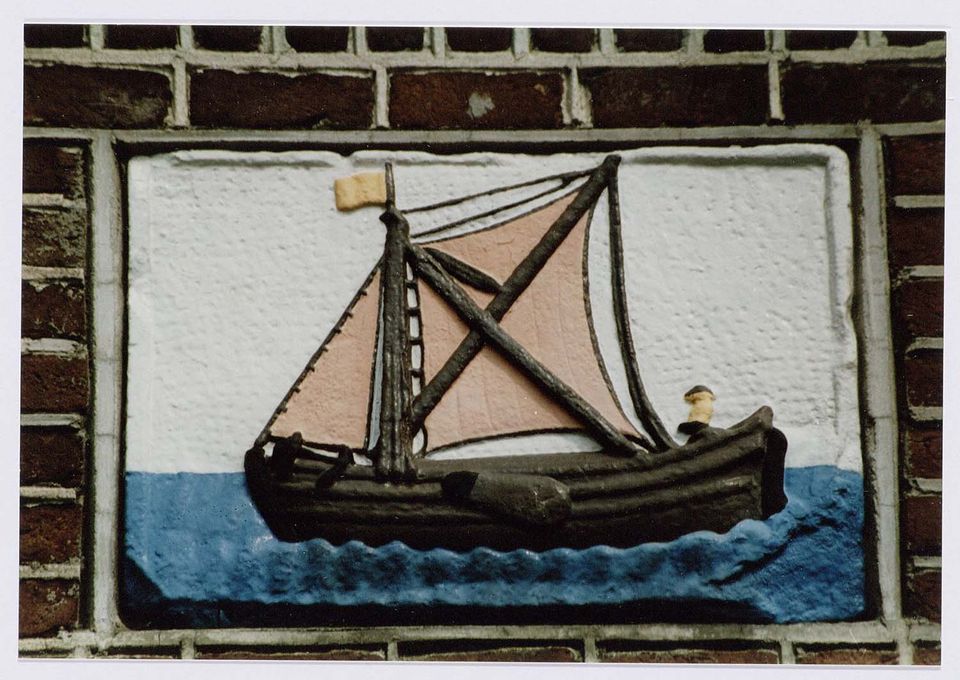
In the facade of Grote Spui 29, there is a stone featuring an image of a ship. Originally, this facade stone belonged to the former building at Grote Spui 23. Between numbers 23 and 27, there used to be a narrow alley known as the “Bocht van Guinee.” In a deed from 1753, Grote Spui 23 is described as: “a small house or dwelling, situated on the Spoeije in the so-called Bogt van Guine.”
The names Bocht van Guinee, Guné, and Guinea referred to the African strait on the route to the so-called “Gold Coast.” In the Netherlands, this area was given this name because a great deal of money was made from the trade in enslaved people.
The Amersfoortse Bocht van Guinee was also known as Dragerswelvaren or Schipperswelvaren. It was an inn and tavern frequented mainly by sailors.
These days …
In the facade of Grote Spui 29, there is a stone featuring an image of a ship. Originally, this facade stone belonged to the former building at Grote Spui 23. Between numbers 23 and 27, there used to be a narrow alley known as the “Bocht van Guinee.” In a deed from 1753, Grote Spui 23 is described as: “a small house or dwelling, situated on the Spoeije in the so-called Bogt van Guine.”
The names Bocht van Guinee, Guné, and Guinea referred to the African strait on the route to the so-called “Gold Coast.” In the Netherlands, this area was given this name because a great deal of money was made from the trade in enslaved people.
The Amersfoortse Bocht van Guinee was also known as Dragerswelvaren or Schipperswelvaren. It was an inn and tavern frequented mainly by sailors.
Nowadays, the term “Gold Coast” evokes different associations. Terms like “Golden Age” and “Gold Coast” are the subject of debate because they fail to highlight the dark sides of this history. The profits of the West India Company and the United East India Company came at the expense of the lives of enslaved people.