
Lecture: Space Vacuum Cleaner Powered by Sunlight
Contact
Schothorsterlaan 21, 3822 NA Amersfoort.
3822 NA Amersfoort Plan your route to Lecture: Space Vacuum Cleaner Powered by Sunlight
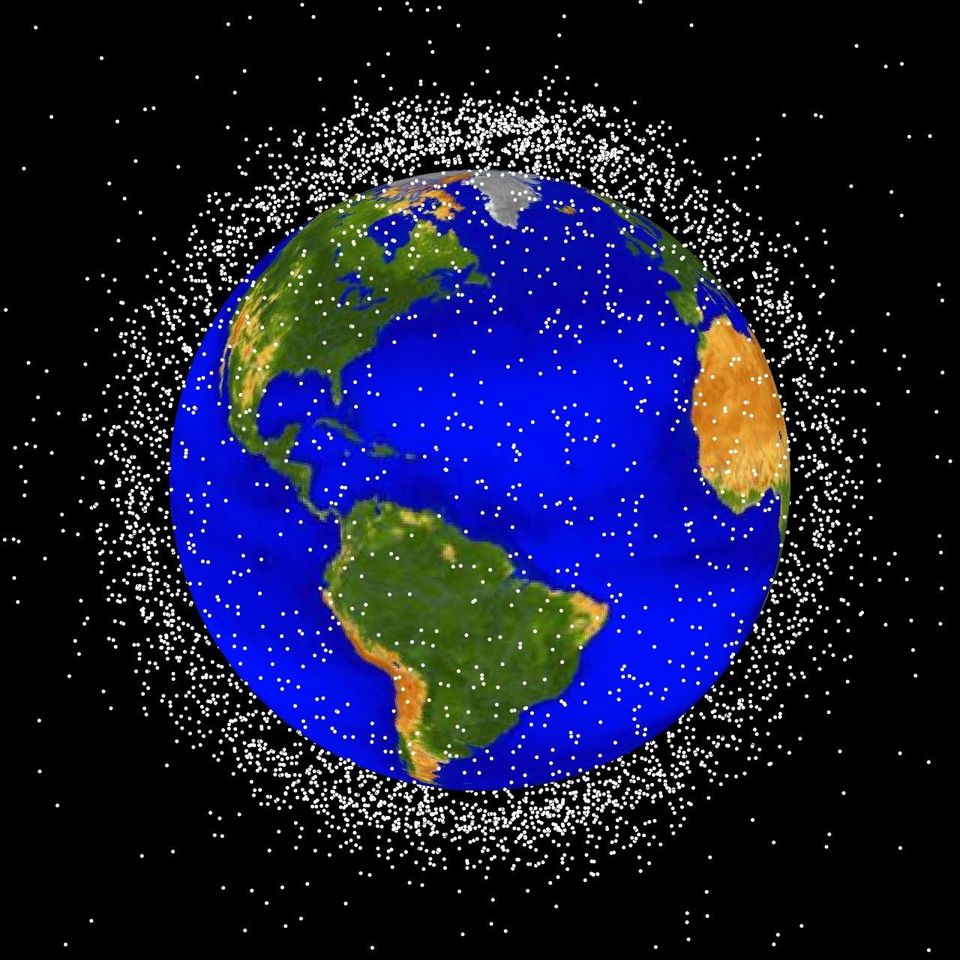
The space around Earth is becoming increasingly cluttered with discarded satellites, rocket parts, and millions of tiny pieces of debris. This so-called space debris poses a growing danger to satellites, spacecraft, and crewed missions. How can we solve this problem?
On Friday, December 11, 2026, Dr. Jeannette Heiligers, associate professor at the Faculty of Aerospace Engineering at TU Delft, will give a fascinating public lecture on an innovative solution: a space vacuum cleaner powered by sunlight.
During the lecture, Jeannette Heiligers will demonstrate how a spacecraft equipped with an ultra-thin solar sail can maneuver through space without brandstof . By making clever use of the pressure of sunlight, it can collect space debris and guide it in a controlled manner into Earth’s atmosphere, where it burns up safely. This sustainable technology can make a significant contribution to keeping space safe and accessible.
Space debris…
The space around Earth is becoming increasingly cluttered with discarded satellites, rocket parts, and millions of tiny pieces of debris. This so-called space debris poses a growing danger to satellites, spacecraft, and crewed missions. How can we solve this problem?
On Friday, December 11, 2026, Dr. Jeannette Heiligers, associate professor at the Faculty of Aerospace Engineering at TU Delft, will give a fascinating public lecture on an innovative solution: a space vacuum cleaner powered by sunlight.
During the lecture, Jeannette Heiligers will demonstrate how a spacecraft equipped with an ultra-thin solar sail can maneuver through space without brandstof . By making clever use of the pressure generated by sunlight, it can collect space debris and guide it in a controlled manner into Earth’s atmosphere, where it burns up safely. This sustainable technology can make a significant contribution to keeping space safe and accessible.
Space debris is a global problem. There are now more than 30,000 objects larger than 10 centimeters in orbit around Earth, in addition to millions of smaller particles. Even a minuscule piece of metal can cause serious damage to satellites or space stations due to its enormous speed. At the same time, satellites have become indispensable for communication, navigation, weather forecasting, scientific research, and many other applications in our daily lives.
Dr. Jeannette Heiligers is one of the world’s leading researchers in the fields of astrodynamics, orbital optimization, and solar sailing. Her research at TU Delft focuses on innovative space missions, including the removal of space debris, climate research, and improving solar storm warnings.
The lecture is organized by Sterrenwacht Midden-Nederland and is intended for anyone interested in astronomy, space exploration, and technological innovations. No prior knowledge is required.
Photo credit: Wikipedia (NASA employee)
When
- Friday 11 December 2026 8 p.m. - 10 p.m.
- Doors open at 7:30 p.m.
Prices
- € 7,49
- Free for members of Sterrenwacht Midden-Nederland.